Moralis • Jan 2022 – May 2025
UX at a Web3 Startup
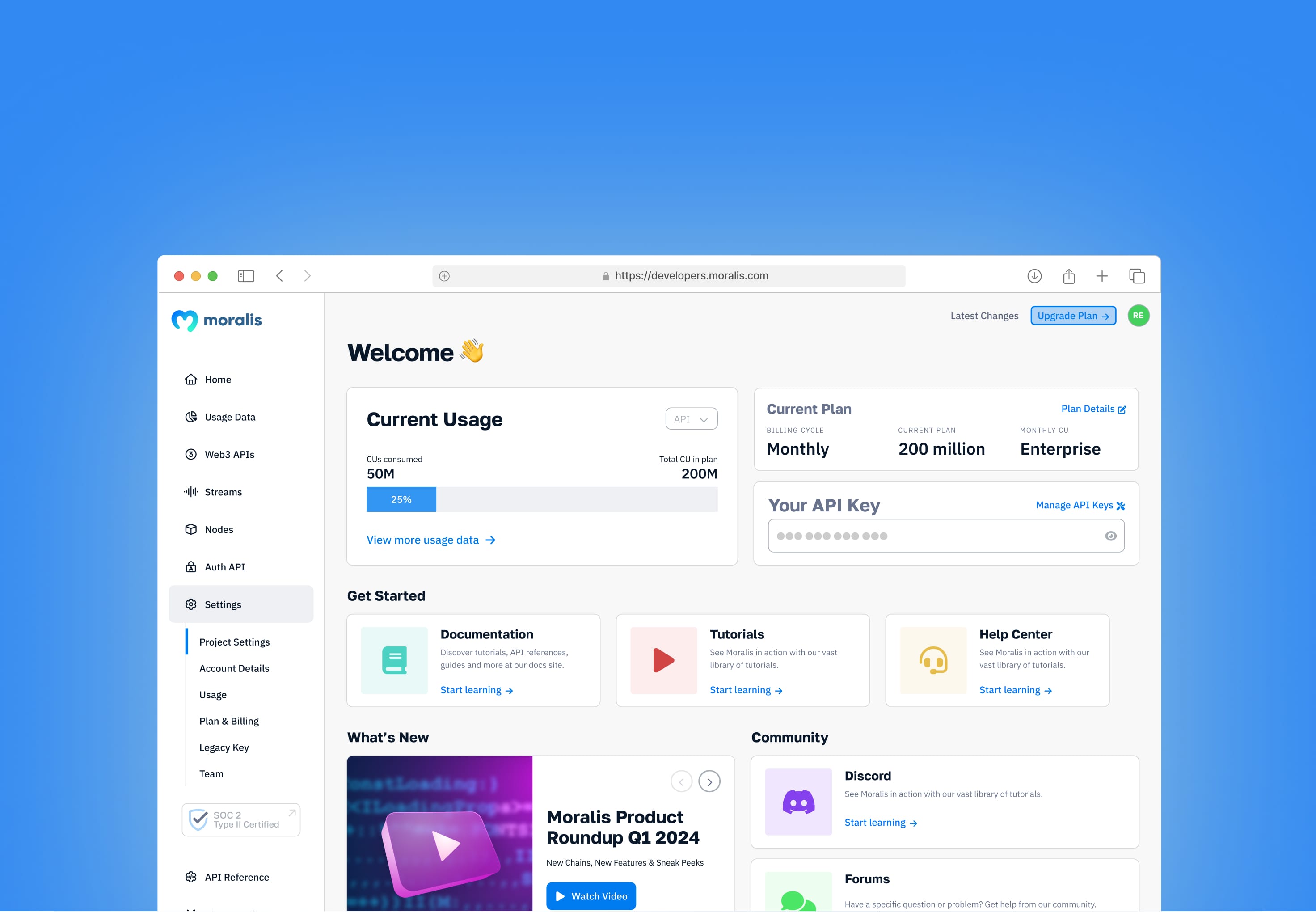
Overview
Moralis is a Web3 infrastructure platform — APIs, nodes, and tooling for building decentralized applications. The challenge: make powerful, complex developer tooling feel approachable and trustworthy, especially for builders coming from Web2.
Rol
As Lead Product Designer, I owned the end-to-end design of the platform for over three years — combining product strategy, UX/UI design, and cross-functional collaboration to lower entry barriers and bring Web2 developers into the Web3 ecosystem through familiar, well-crafted interfaces.
Timeline
Jan 2022 –
May 2025
Dashboard Redesign
Turning a cluttered control panel into a developer's home base.
The dashboard was the first thing every Moralis developer saw after login — it needed to communicate value immediately without overwhelming. The old version failed on both fronts.
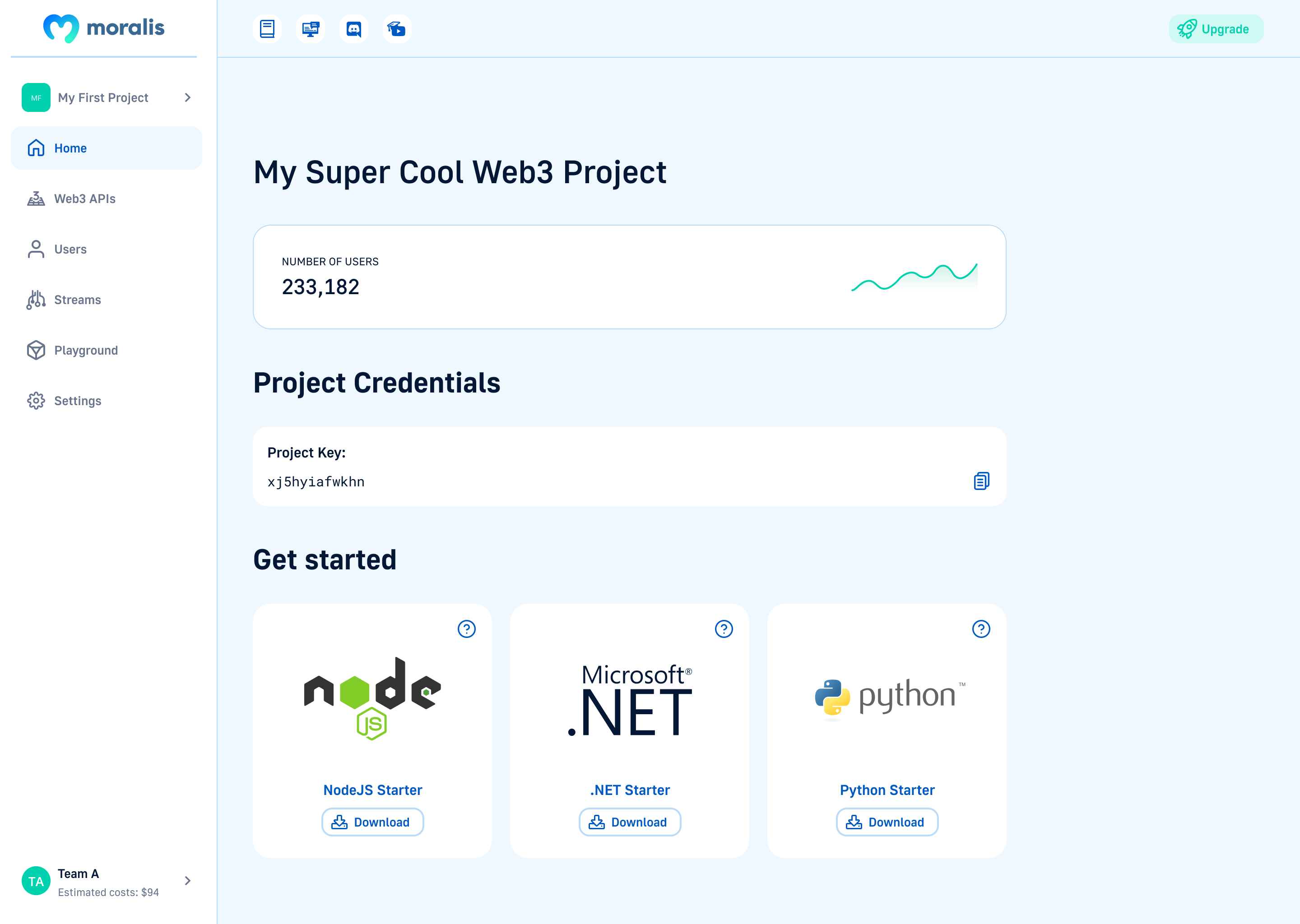
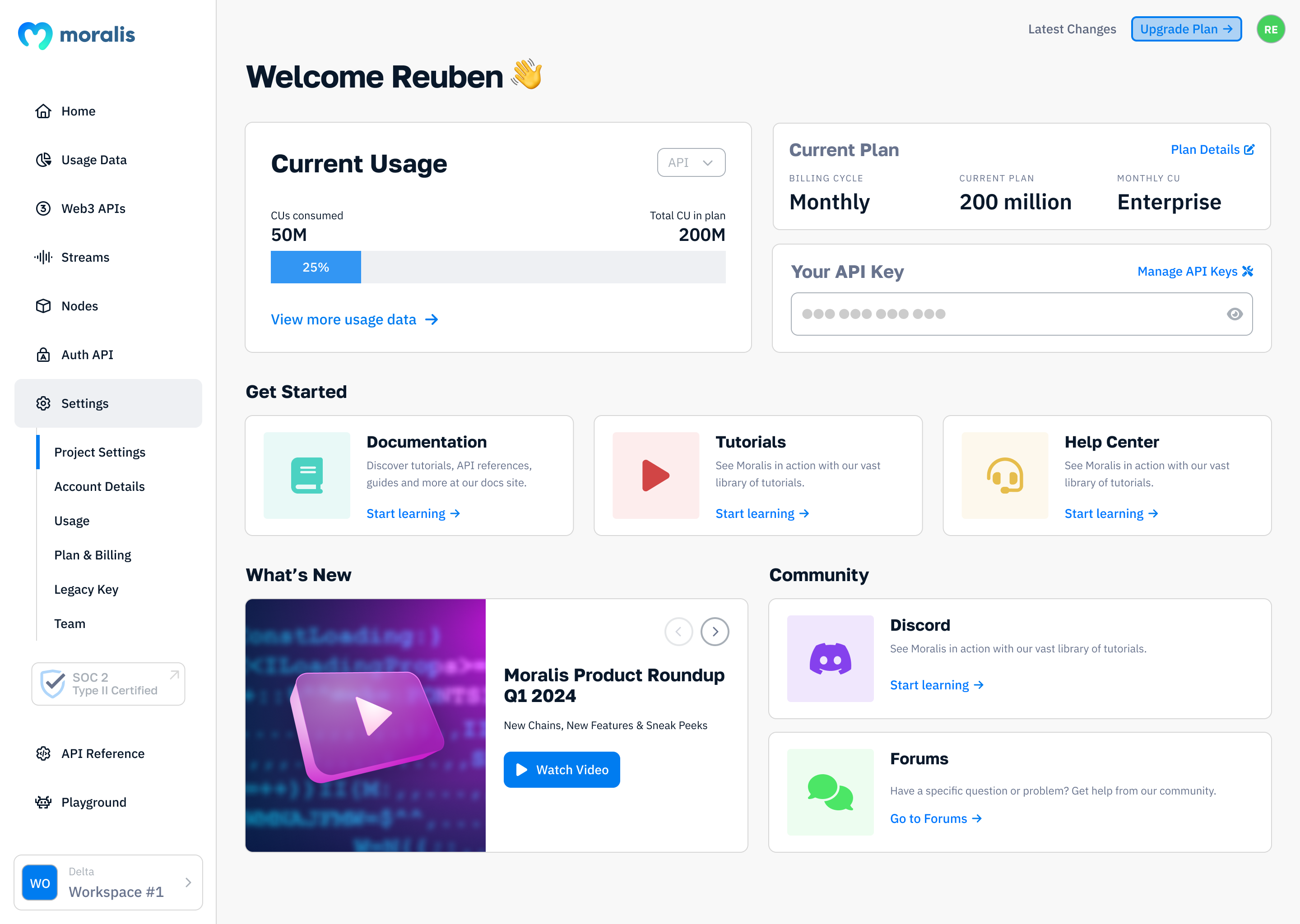
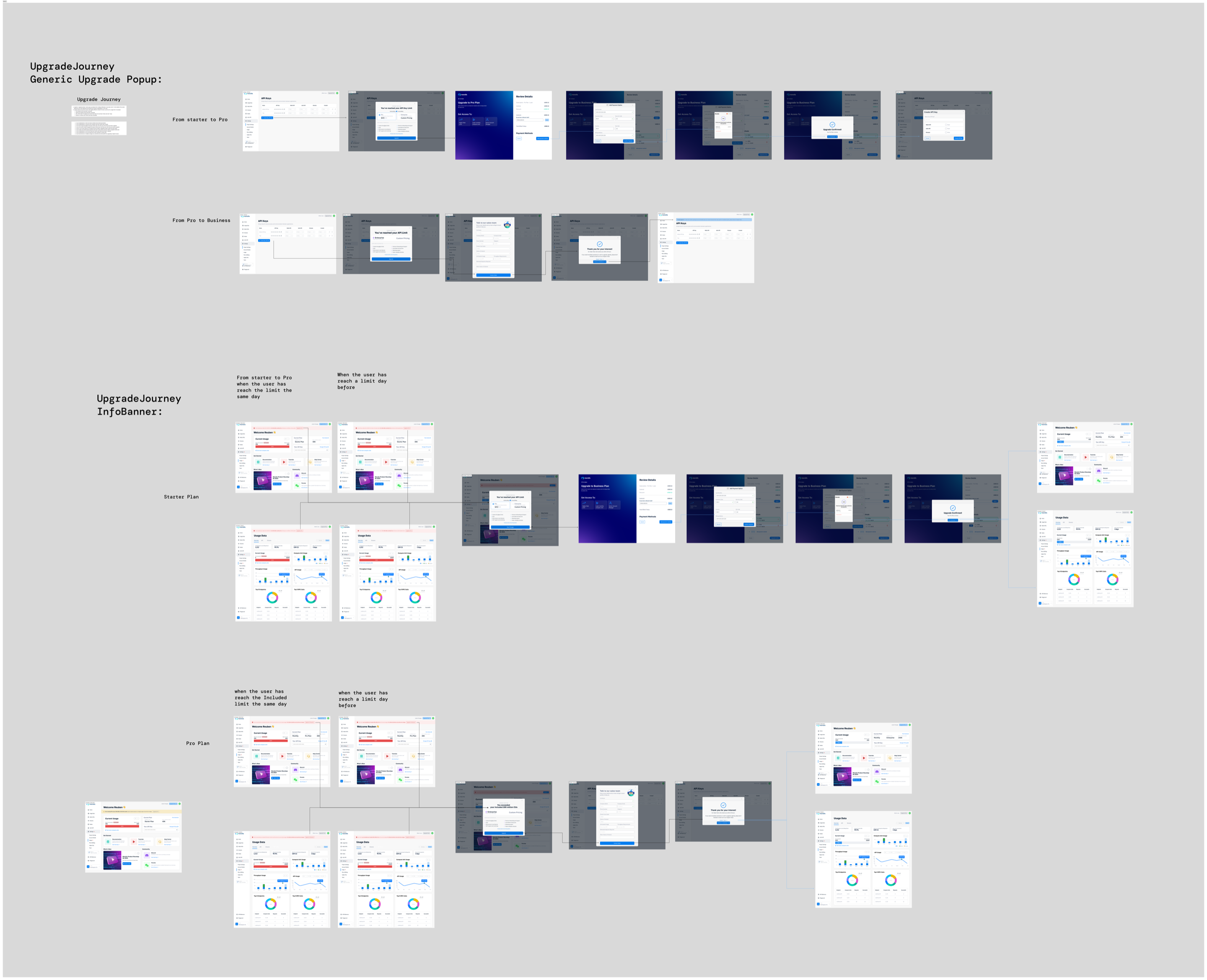
The old dashboard buried key data — API keys, project details, usage limits — in a cluttered layout with no clear hierarchy. Developers had to hunt for information on every visit. The redesign reorganized everything around what developers look for first: usage vs. plan limits, API keys, project health, and a clear path to docs. Result: +22% onboarding completion.
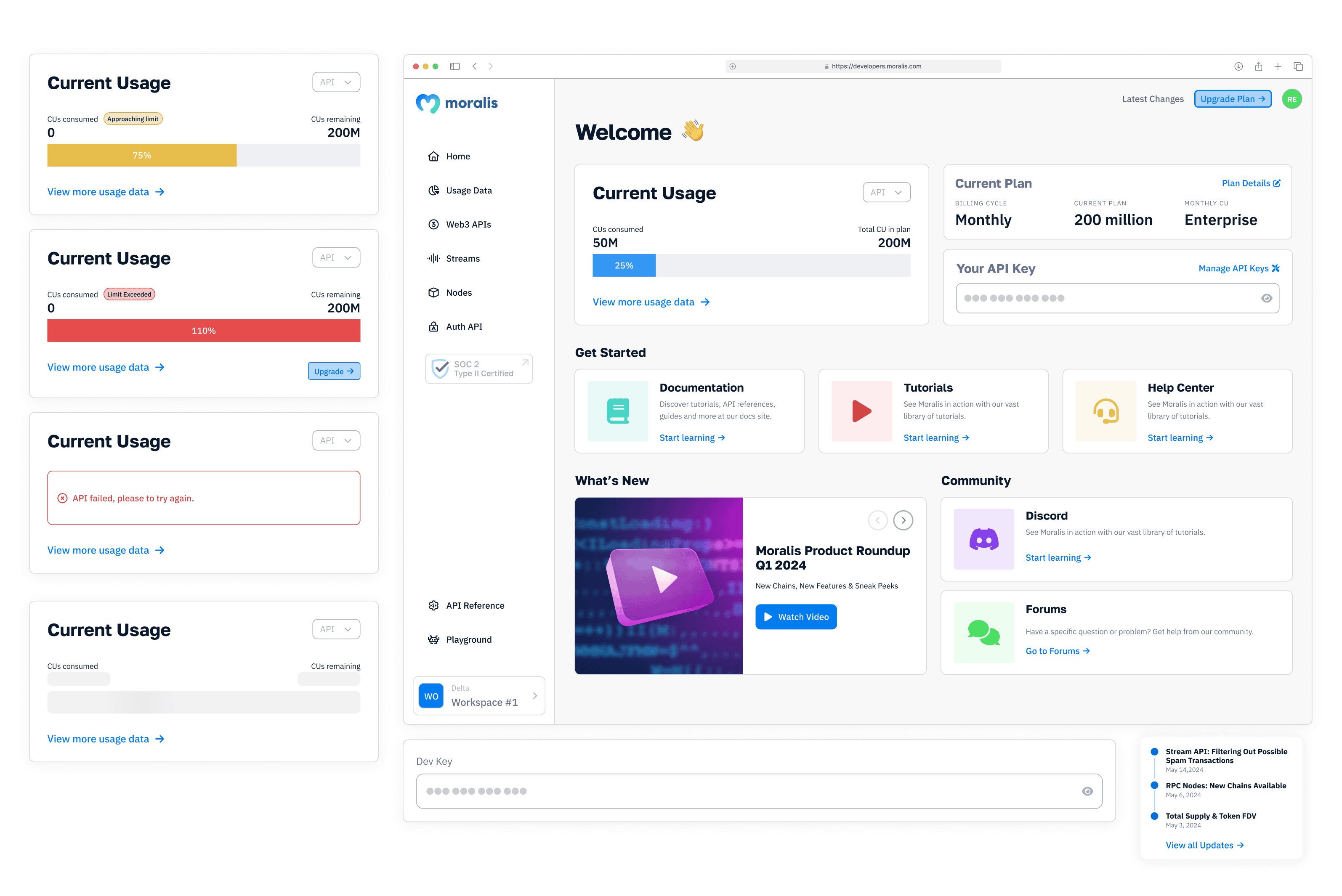
A dashboard isn't a feature showcase — it's a status report. It should answer the developer's first question before they even ask it.
Streams
Designing for builders, not users
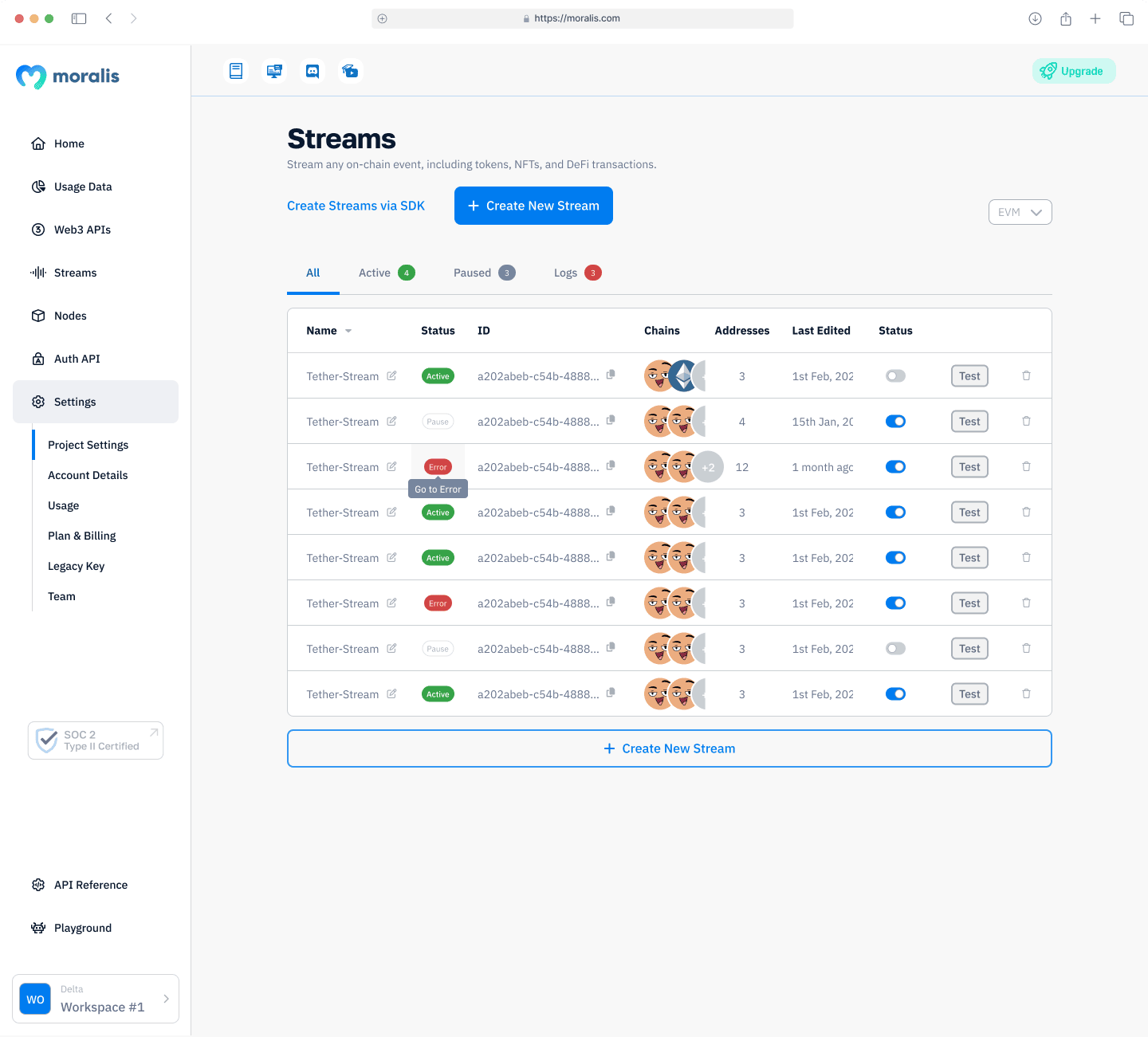
Moralis Streams lets developers monitor real-time wallet and smart contract events across multiple blockchains. Designing this surface meant working at the intersection of complex data, developer workflow, and trust — users needed to know their event listeners were working correctly, at a glance, without diving into logs. Developers optimize for speed, trust, and control — not delight. Every product decision had to earn its place by reducing friction or increasing confidence in the platform.
The challenge
Real-time event streams generate high-frequency data across multiple chains simultaneously. The UI needed to make that complexity manageable — not just display it. Developers needed to configure, monitor, and debug without getting lost in raw data.
What I learned
Developers don't trust interfaces — they trust signals. Status indicators, familiar patterns from tools they already use, and immediate feedback loops mattered far more than visual polish. When users can scan the state of a stream in seconds, their confidence in the whole platform grows. Complexity isn't the enemy; invisible complexity is.
The result
A developer tool that made monitoring blockchain events feel like monitoring any other API — familiar, reliable, and scannable. The design significantly reduced the learning curve for new users and enabled seamless integration of the Streams API into real applications.
More Work
Other surfaces I owned at Moralis.
Nodes
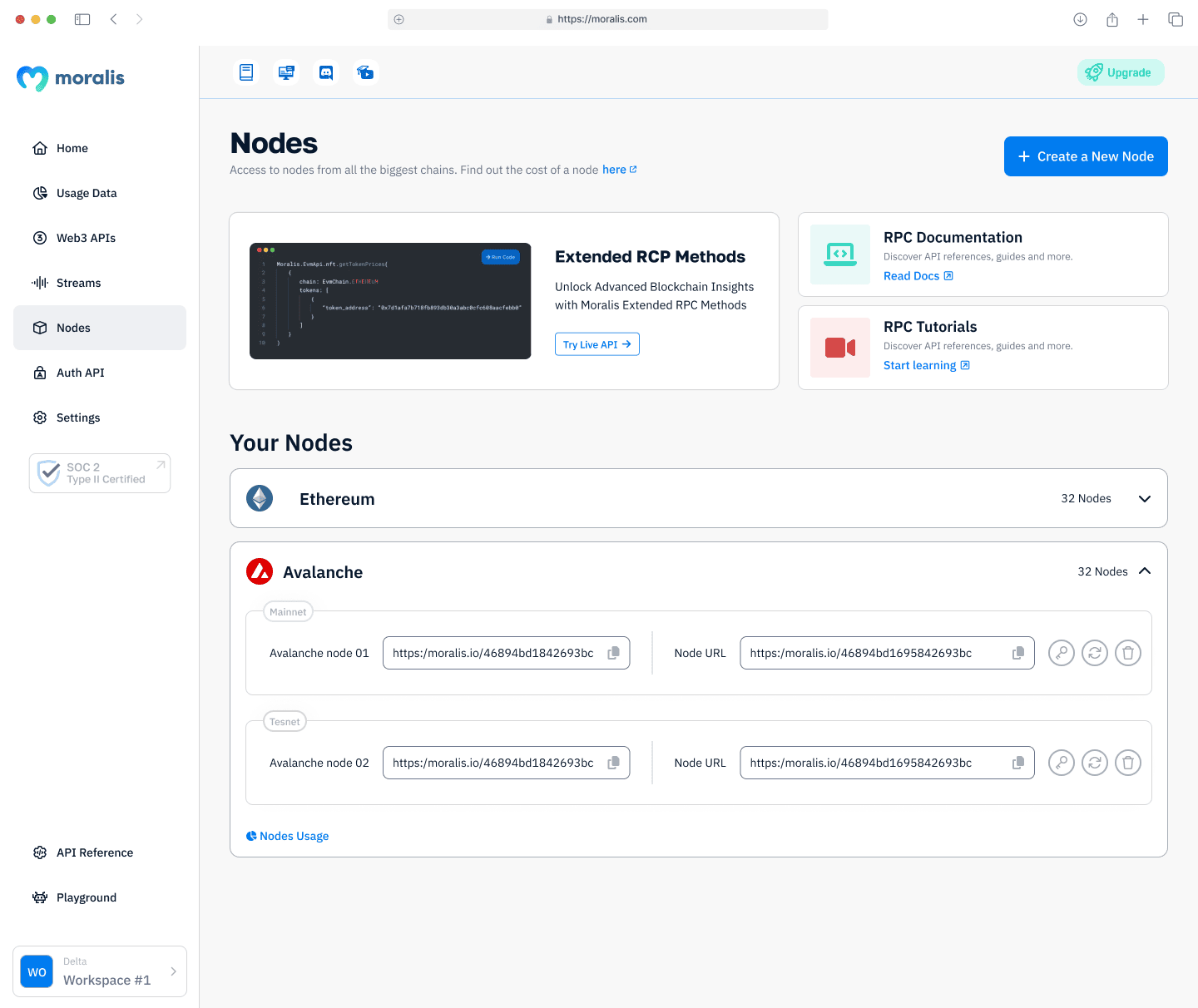
Designed the user flow and interface for Moralis Nodes — giving developers easy access to high-performance RPC nodes across major blockchain networks. The design emphasized reliability signals: uptime visibility, response time indicators, and security certifications (SOC 2 Type 2). For infrastructure products, trust isn't built through delight — it's built through transparency and consistency.
Payments & Checkout
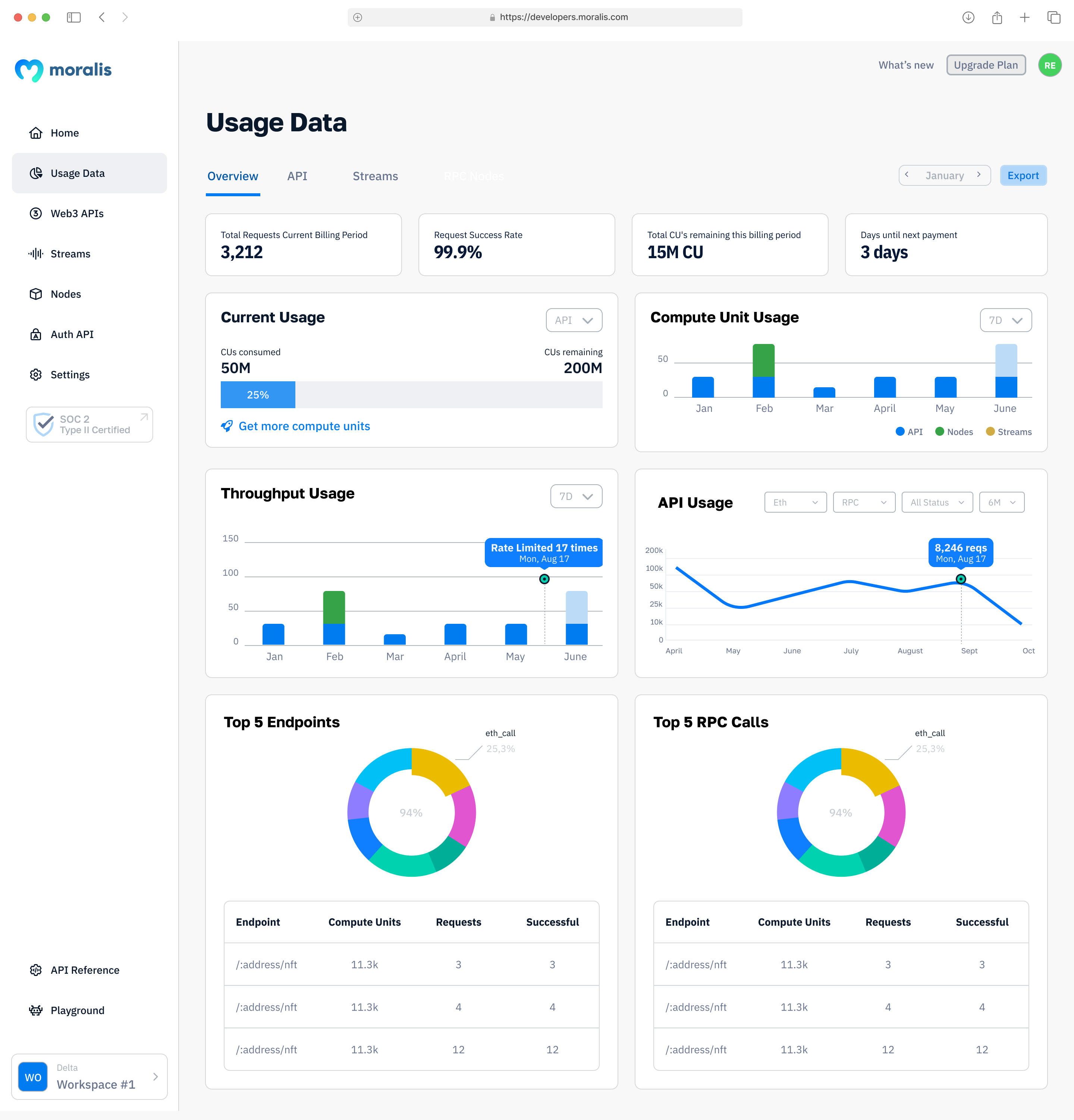
Directed the redesign of the payment and checkout flow, including Payment Links, multiple payment method support, and a streamlined plan upgrade path. The focus was reducing conversion friction at the exact moment developers decide to invest in the platform — a high-stakes UX moment with a direct line to revenue. Simplified transaction flows improved overall payment completion and reduced checkout abandonment.
Learnings
Three years designing developer tooling in the Web3 space taught me things that don't show up in any playbook. Here's what shaped how I think about product design.
Balancing innovation with usability.
Web3 offers opportunities for genuinely novel interactions, but novelty without usability is just friction. The most impactful design decisions at Moralis were the ones that made complex blockchain operations feel like standard developer tooling — not the ones that leaned into Web3's uniqueness for its own sake. Innovation earns its place only when it's accessible to the people it's meant for.
Bridging Web2 and Web3.
Most Moralis users came from a Web2 background. Designing for them meant building interfaces that were intuitive without erasing what made Web3 different — wallets, gas, smart contracts, chains. The goal wasn't to pretend those concepts didn't exist; it was to introduce them in context, when relevant, in language that developers already understood from their existing mental models.
User education as product design.
In a space as new as Web3, documentation and UI aren't separate concerns — they're the same surface. Every tooltip, empty state, and error message is a teaching moment. When users understand what's happening and why, they make better decisions, trust the platform more, and stay longer. Designing for comprehension is designing for retention.